
Last month, a friend complained in our group chat her Christmas bread had flopped, yet again. She had decided to resign to her fate and stop trying. Helpful me couldn’t have that. Questions ensued. Had she let the dough rise? She had. Had she pre-heated the oven? Of course she had. Then what else had she done?
She’d covered the dough while it rose, with plastic wrap. So, did the dough stick to the wrap? A little. Ah. A lesson was learned that day: do not let the plastic touch the bread, even if you have oiled it. The bread, by the way, turned out just fine, taste-wise, so no waste was generated.
The life of any regular home cook probably includes fails like that. It also includes disasters, such as putting bicarbonate of soda instead of salt in the most beautiful moussaka ever to see the inside of an oven. The resulting meal was inedible but, my, were the colours brighter than usual!
There are also the mixed-measures disasters such as assuming that “1 cup of flour where 1 cup = 200 ml” means “200 g of flour”, which produced a rather chewy sweet bread instead of the intended cake. Luckily, the recipients of the disaster were the design department of a major national daily — tough men who ate it all without batting an eye.
The string of rugbrød disasters I caused myself and my family between 2013 and 2016 left a lifelong scar on my soul, including half a dozen inedible loaves and two ruined bread pans, one of them really expensive. The bread stuck, okay? It stuck so badly I had to knife it out of the pan. I did make a few decent loaves, to be honest, but it was too much hassle for something only I would eat.
That said, there are almost-disasters that can be fixed, as long as you catch the looming events early enough. Which brings us to this week and my Saturday plan to make eclairs because I hadn’t made them in years and I was in the mood for something light and fluffy, and full of the caramel pastry cream, the recipe for which I’d bookmarked and was looking for an excuse to make.
The cream turned out perfect. The eclair dough, not so much. The recipe is straightforward enough. You boil some water, add butter to it, let it melt, add the flour, mix vigorously, remove from the stove, let cool and add the eggs, one by one, then mix until glossy and airy. Except when you forget the rather important step of letting the flour paste cool before starting with the eggs.
Most of us, I guess, have experienced brain short-circuits like that. They’re not total system failures, no. There’s a part there that says “You must let it cool,” but there’s the other part pointing out that “Mum’s recipe doesn’t mention any cooling”, so you plonk the first egg in the hot paste and turn the mixer on. Which is why the first — and last — batch of eclairs looked like this:
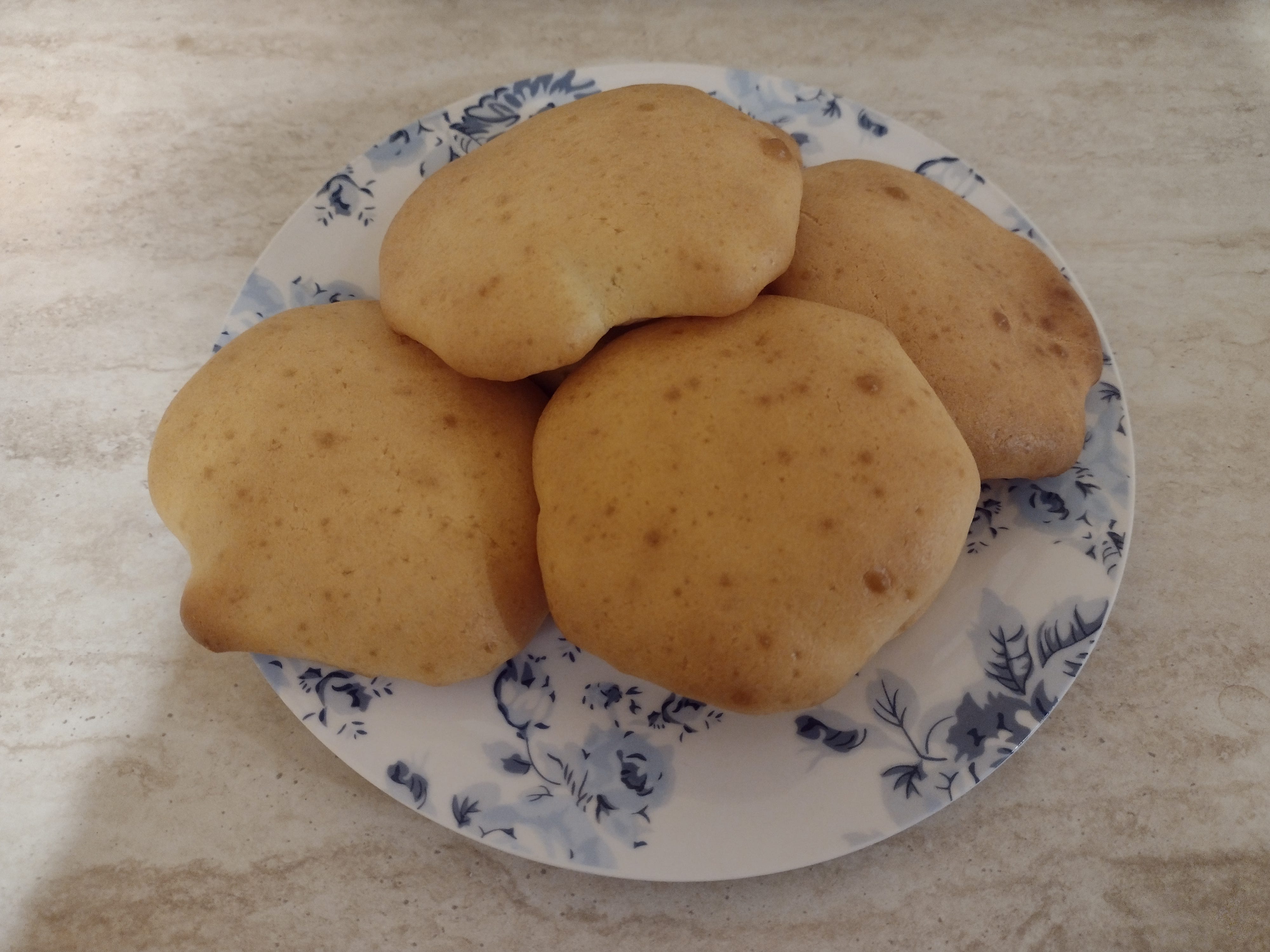
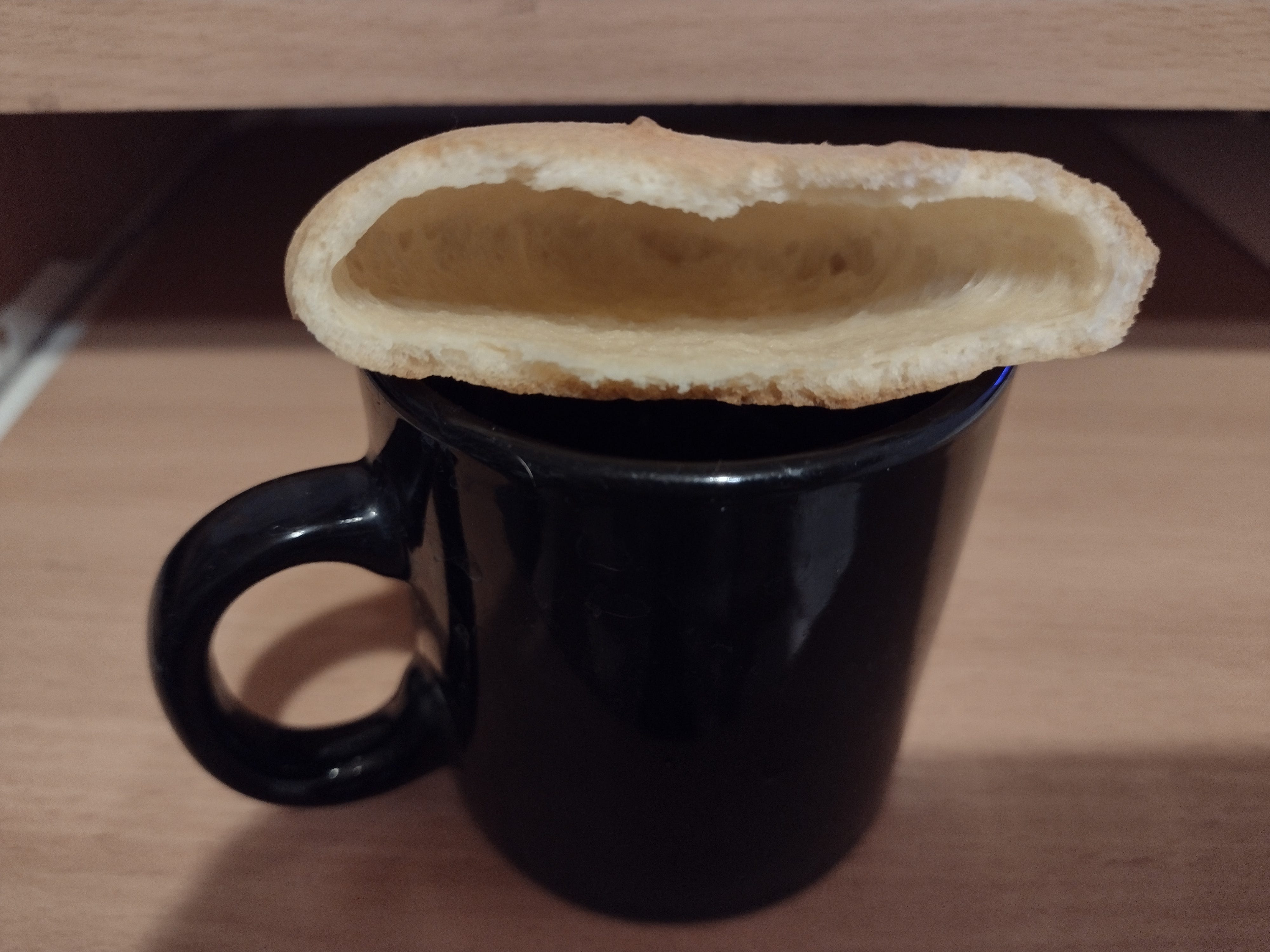
But were they hollow inside? You bet they were, after all the beating that dough got. Was it the right kind of hollow? No. No, it wasn’t. Which doesn’t mean Cat didn’t immediately proceed to fill one with the aforementioned caramel cream, not pictured because it was eaten straight away.
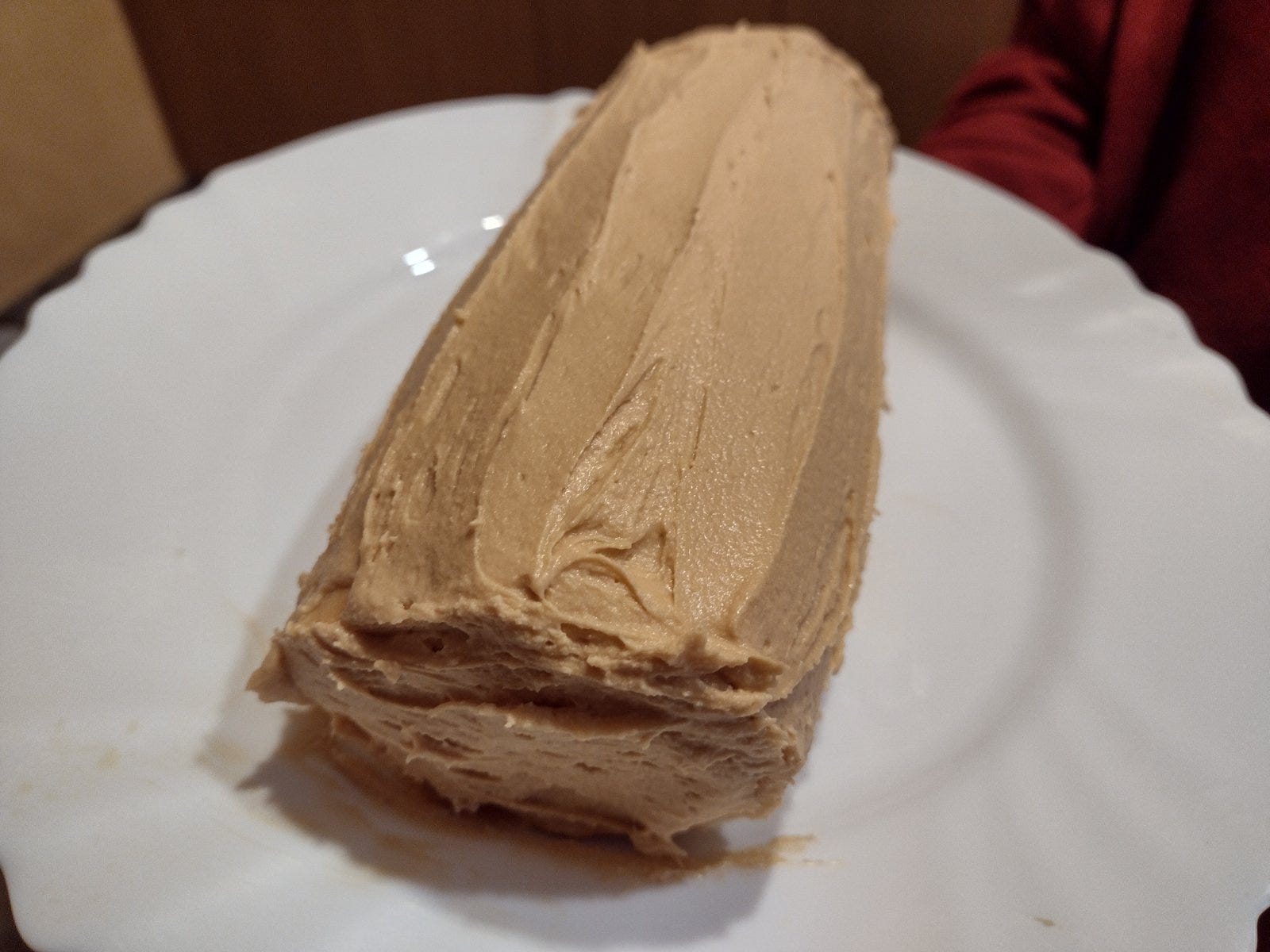
So, I had a pan full of non-eclair dough and a hot oven. It was a no-brainer. I added a bit more flour, not sure why, some baking powder, just in case, and baked the life out of the failure. Then I rolled it, let it rest, unrolled it, and filled it with the caramel cream, then covered it with the rest. Now, we have a caramel cream roll and it’s not half bad.
We also had an argument that went like this:
Me: What shall I sprinkle over it?
Cat: Nothing.
Me: At least some bleached almonds?
Cat: No. Simple is better.
So we’re having a simple caramel roll.
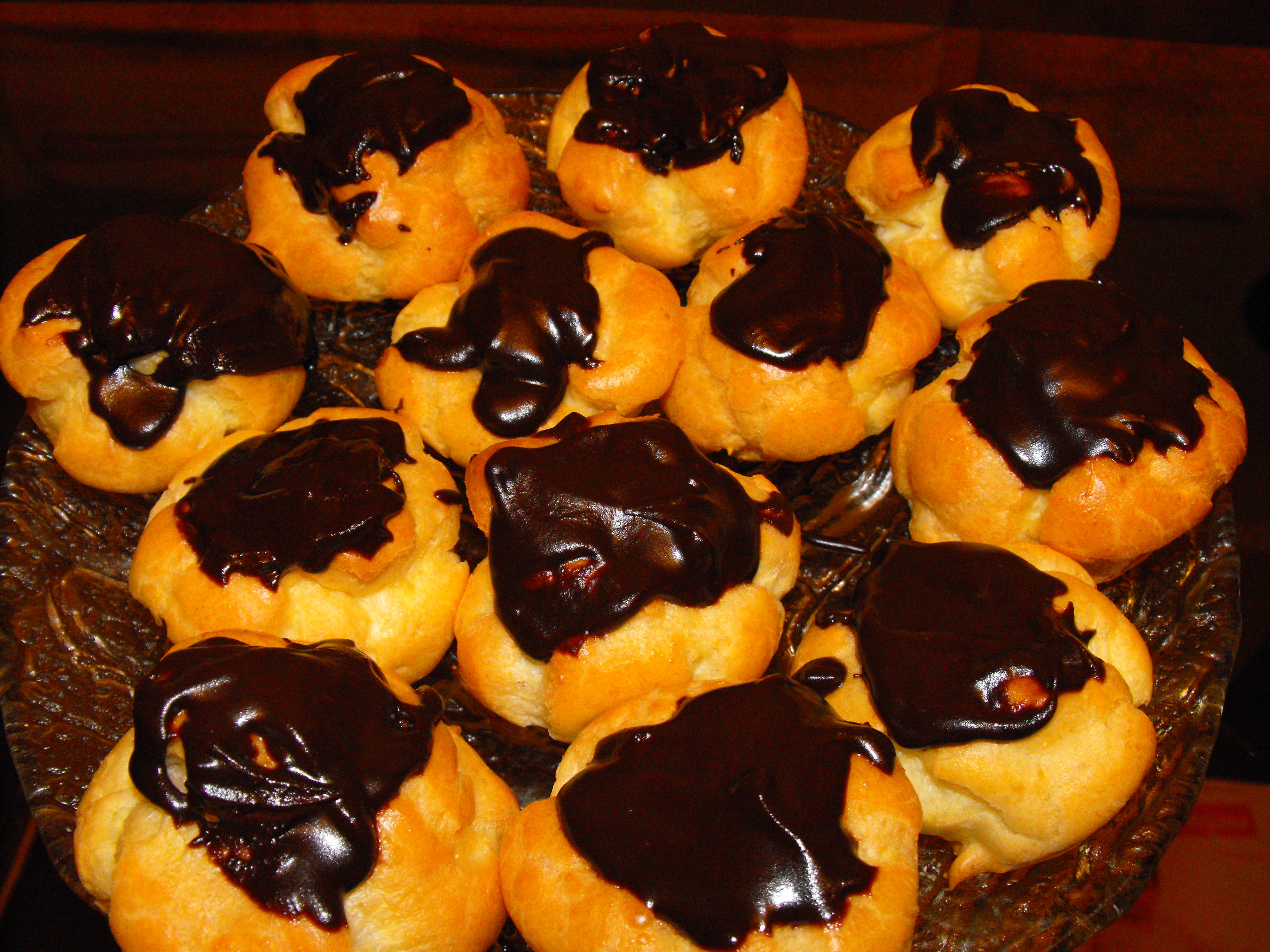
Finally, I would like to submit evidence that I can, in fact, make eclairs.
Recipes
Eclairs
150 ml water
75 g butter
85 g flour
3 eggs, room temp
pinch of salt
Boil the water, add the butter to it, stir, add flour and salt in one go and stir vigorously until a smooth paste forms. Let the paste cool and add the eggs, one by one, whipping with a mixer after each egg until fully incorporated. Continue whipping until the dough becomes glossy and starts, I’m quoting the recipe, “falling off the beaters in chunks.”
Pre-heat oven to 210 C. Using either a spoon (teaspoon for small eclairs, tablespoon for larger ones) or a piping bag (for the loaf-like style) place the eclairs on a paper-lined tin generously spaced out. They rise and they expand in all directions. Put them in the oven and bake until golden. It’s usually about 7-10 minutes, if I remember correctly.
Caramel cream
225 white sugar
200 heavy cream (30% fat plus), warm
70 g butter, cubed
Caramelise the sugar in a deep, thick-bottomed pan over low heat. It takes time, mind. Once the edges start melting, start stirring sparingly, with a whisk. Don’t worry if the sugar forms clumps, keep stirring and they will all melt eventually, the cheeks.
Once sugar is fully caramelised, add butter, freak not about the sizzling, keep stirring until sort of blended, then add the cream slowly, keep stirring and let simmer for about three minutes, per the recipe. I let it simmer for about 8 minutes worried it was too liquid. That’s all right, it is liquid while hot. It thickens as it cools. I kept stirring all the time lest it started burning at the bottom.
Once the simmering is done, remove the pan, cover and put in a cold place — fridge or, in my case, outside. Let it cool completely, then grab your trusted mixer and get whipping until light and fluffy, which in my case was a couple of minutes.
You can use it as is for that intense caramel taste or you can mix it with pastry cream. Or with whipped cream. Or with cream cheese. The possibilities are near endless.
Well, this post succeeded in making me hungry.
Mmmmm. Eclairs....
I liked to cook when I was a child (sub 12) (still do). I attribute it to children being imitative and having a Mom who cooked every meal and two much older sisters.
Anyway, once I decided I was going to make a giant pot of chocolate pudding. It wasn't enough to assemble the recipe in my Mom's book. I must have doubled or tripled the recipe. I think I had tasted chocolate pudding recently and wanted ALL the chocolate pudding.
I don't remember much, but I do remember that there was a step in which one carefully heated the mixture, stirring constantly, and then later added the eggs.
Either there was nothing about letting it cool, or I missed that step.
I ended up with a giant pot of chocolatey mixture full of chunks of scrambled eggs.
To this day, if I'm adding eggs to a mixture, I pause to ask myself if the eggs are going to coagulate on contact.