
Once upon a time, after humans discovered the joy of having a cow and drinking its milk, some distracted milkmaid left some milk in the sun too long. The milk got an infection, and that infection turned into what we now know and love as yogurt.
Yogurt is as traditional in Bulgaria as the minced meat barbecue or the tomato salad-plus-brandy combo that is now, I suspect, on its way out as people don’t drink so much brandy any more. But yogurt remains. Yogurt here is not just tradition. Bulgarian yogurt is basically our one claim to real world fame — because the microscopic rods that turn milk into that very special kind of yogurt only live on the territory of Bulgaria. They’ve even got a special name because of this: Lactobacillus bulgaricus.
Basically, yogurt happens when you introduce any milk-loving bacteria into their equivalent of a bucket of food. If the milk is warm enough, the little rods start feasting and producing acid. The acid turns the milk into yogurt, and then we turn the yogurt into gut health, longevity, and an indispensable part of our diet.
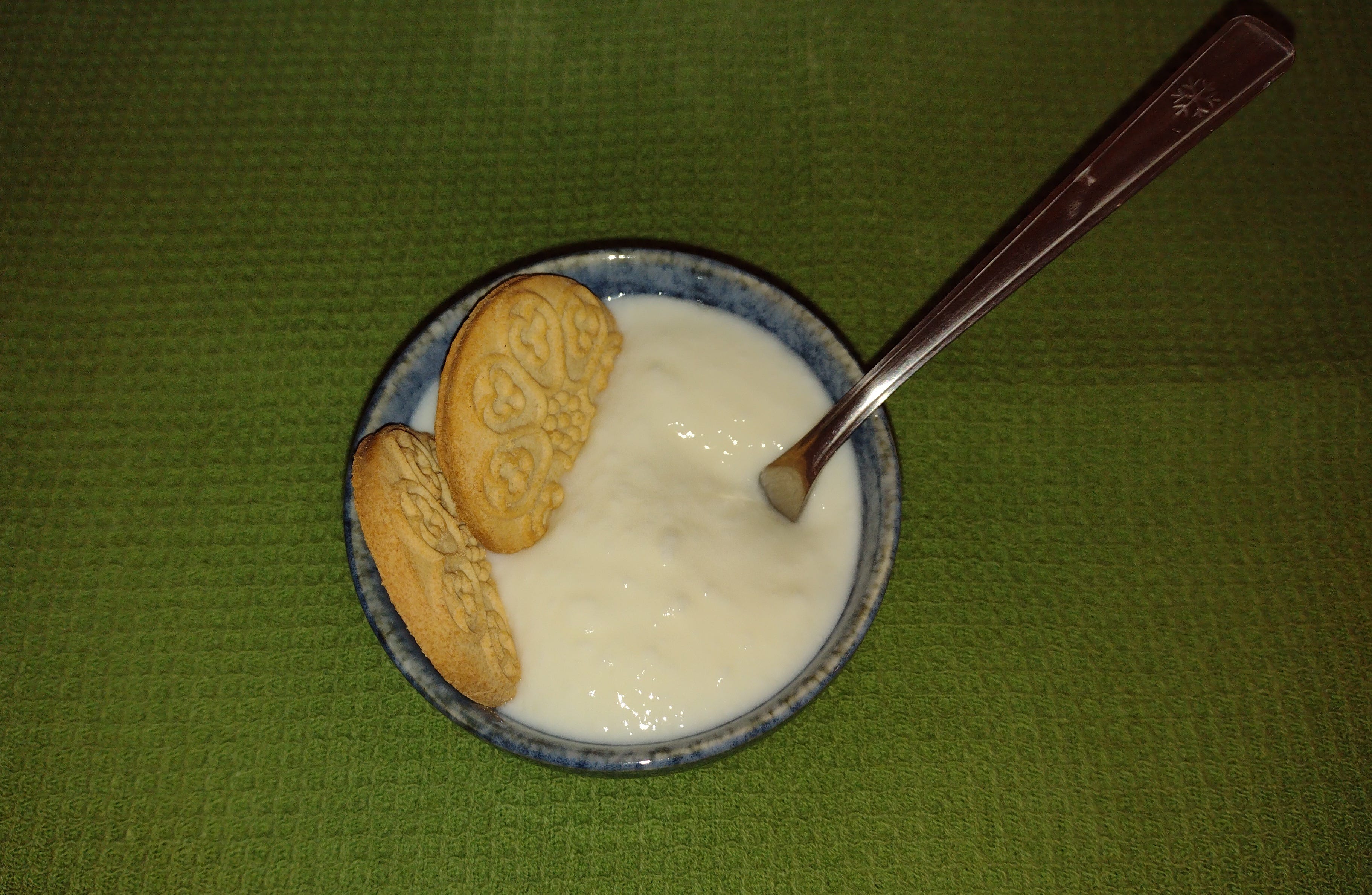
Yogurt goes with almost literally everything. Yogurt and biscuits was what I essentially survived on in my young age (because I wanted to, not because there was nothing else to eat). Yogurt and jam was another favourite. Yogurt is the key ingredient in the cold summer soup called tarator that we inherited from the Turks and the equally inherited drink ayran. Better than water for hydration in the heat.
Yogurt goes marvelously with moussaka and it goes equally marvelously with the drob sarma (chopped lamb lungs and liver cooked with rice and fresh herbs) that traditionalists greater than we are make for Easter or St. George’s Day on May 6th. Perhaps the only thing yogurt does not really go with is fish but I think we can survive that. Also, I may be wrong about it.
Yogurt, however, is more than a food. Yogurt is an immune system booster, a source of calcium and magnesium, and other elements that are surprisingly important for the smooth functioning of your body. It is also a fast-acting remedy for sunburns and a face mask, its lactic acid cleansing the skin, the fats moisturising, and the probiotics fighting nasty things like fungi and bad bacteria. Yogurt, in short, is a multipurpose-use product. The best kind of yogurt is, of course, the homemade kind. And guess who can now make their own yogurt at home? That’s right.
When Cris changed jobs last year, he was excited at the prospect of working in a factory with big, complicated machines, as befits someone who’s been taking things apart and putting them back together better since he was four or thereabouts. But a factory is the wrong word because they don’t manufacture things. They grow starter cultures and then process them into something like the dairy equivalent of LNG, to be send to markets around the world. Incidentally, the factory happens to be in a village featuring a lady that keeps a dairy cow.
We have since learned about the amazing variety of starter cultures — some clients like a more traditional, sour taste, while others prefer it sweeter — and the fact you can make new ones with new tastes. We have learned there are starter cultures for butter, and it is delicious butter that they make. And we learned to make yogurt at home, which is obscenely simple.
The traditional way, from the times before modern starter culture production, is to heat up the fresh milk to boiling point but not above, maintain that temperature for about 10-15 minutes, let cool to a little above body temperature, then pour it into jars and add a tablespoon of yogurt to the milk, mix, put the lids on, set in a warm place and wrap in a blanket. The magic, which is actually science, happens in about 24 hours, and the longer you leave it, the thicker it becomes because those lactobacilli are voracious.
With us, it was a bit of trial and error at first, until we found the culture that makes sufficiently sour yogurt. The first batch was a bit sweeter than we’re used to but it was delicious nevertheless. And because Cat, a die-hard fan of true sour yogurt, did not really like that first batch, I found a new use for yogurt — as bread dough additive instead of olive oil. It makes the bread even fluffier, spongier, and generally tastier.
Then, last week, Cris brought home a pack of starter culture that was half a gram more than the recipe he uses calls for. We don’t have lab-grade scales so there was no way to measure the 1.5 grams from the original recipe precisely. I said “Just chuck the whole 2 grams in and see what happens.” What happened was the yogurt that Cat, the Yogurt Eater, declared exactly right.
The funny part of the story? Cris used to subsist almost exclusively on bread and yogurt at university, saving his scholarship to buy a PC (mid-90s, PCs were expensive). After that he couldn’t even look at yogurt, let alone eat it — until he turned into the Yogurt Master. He’s at a bowl a day and we’re discussing doubling our usual weekly milk order of two litres. Clearly, we are going to live forever, with glowing skin and impenetrable immune systems. And if any of you ever find yourselves in Bulgaria, drop by, we’ll share.
Lovely story! My wife makes a yogurt sauce with fresh dill to go along with lightly smoked cold salmon. Another use for one of Gods superfoods 💪
I grew up on my father’s homemade yogurt and sourdough whole wheat bread (he also brewed a decent stout), so this brought back some lovely memories. My house is too cold for making yogurt in the winter, so I switched to kefir until it warms up.
I want recipes, though! Especially for the tomato salad and brandy concoction and the cold soup!!